


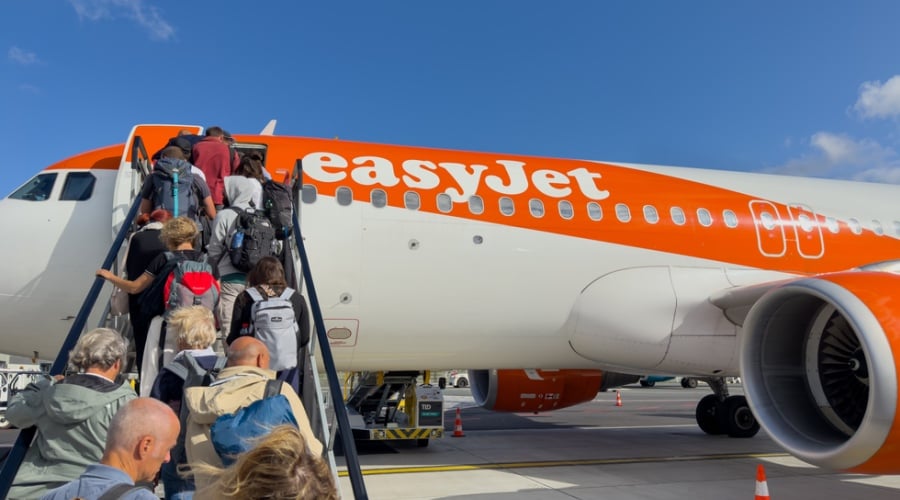
EasyJet’s third-quarter pre-tax profit plunged from £286 million last year to £85m.
Its fuel costs for the three months to the end of June 2026 were up £105m, while its load factor (percentage of available seats sold) was down one percentage point.
In a trading update issued today, easyJet said its financial performance in the third quarter was impacted by elevated fuel prices and a reduction in consumer demand, due to the Middle East conflict and concern about ‘unrealised’ fuel supply issues.
Strong demand for late bookings in the month of departure was seen throughout the quarter, it said, however, this was insufficient to fully offset the weaker booking trends experienced following the conflict.
EasyJet holidays made a pre-tax profit of £84m, down just £2m on Q3 last year, which the company said demonstrated ‘the resilience of its capital-light model’.
The package holiday company saw customer numbers grow 8% during the quarter.
The group expects its package holiday customers – which currently stand at 3.1m – to grow by ‘low double digits’ for the full year, ‘taking market share in a competitive environment’.
EasyJet said strong late bookings continue, with bookings beyond the month of departure also beginning to improve, ‘albeit still needing some price stimulation’.
The airline also said it was seeing mid-single-digit growth in ticket yields for the first quarter of 2027, going into the winter.
CEO Kenton Jarvis added: “We have continued to manage the impact of the Middle East conflict, and its effect on fuel prices and booking trends, during the quarter.
“Pricing has been attractive, driving strong late booking demand for our flights and holidays and our relentless focus on execution has delivered an excellent operational performance and even greater levels of customer satisfaction.
“As consumer confidence increases, we are seeing the load factor gap close for peak summer and an extension of the booking curve as customers continue to prioritise travel and take advantage of our great fares.”
EasyJet expects its costs excluding fuel to increase by ‘low single digits’ for the second half of the year, but it said its fuel costs for the final quarter ‘remain uncertain’ due to price volatility. It has hedged 79% of its fuel for Q4, it said.