


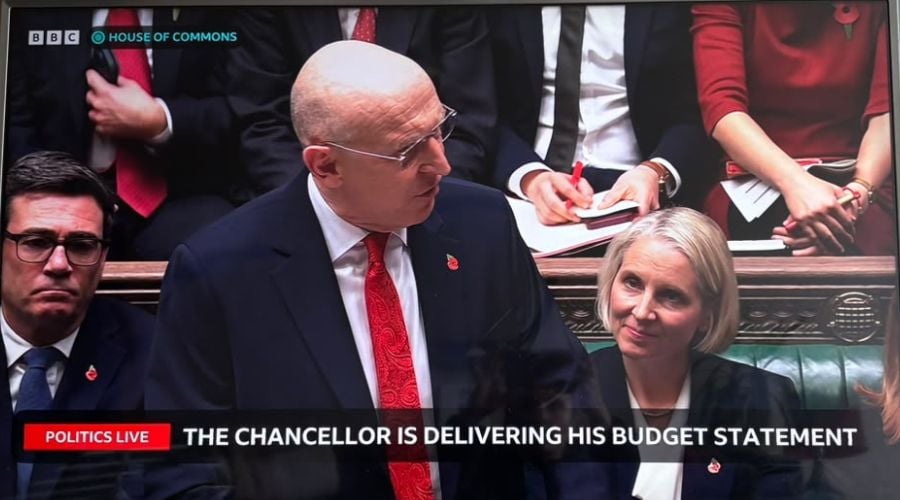
Agents could benefit from business rates changes but face higher staffing costs under measures announced in the Budget this afternoon.
Small Business Rates Relief for retail, hospitality and leisure businesses in England will rise from a rateable value of £12,000 to £18,000, taking a further 70,000 businesses out of paying business rates, according to Chancellor John Healey.
The Budget also confirmed a two-year real-terms freeze in business rates bills for all retail, hospitality and leisure properties in England.
However, travel-specific measures were limited in a Budget that was widely expected to be low-key, with the Chancellor saying the measures were intended to give households and businesses ‘some breathing space’ amid rising costs.
Spokesperson for the UK Outbound Travel Group Julia Lo Bue-Said, who is also Advantage Travel Partnership CEO, said: “Whilst we welcome some of the measures announced today, particularly on business rates, the Chancellor has missed a clear opportunity to back travel, a sector that is already delivering the growth this Government wants to see.
“If Ministers are serious about boosting the economy and easing pressure on household budgets, they should start with the costs they control directly, such as Air Passenger Duty, which is set to rise again next April and will only push up the cost of holidays for hard-pressed families.”
Ukinbound CEO Joss Croft added: “Today’s Budget was also a missed opportunity to improve the UK’s competitiveness. The inflationary increase in Air Passenger Duty adds to the cost of travelling to and from the UK at a time when competing destinations are working hard to attract international visitors, investment and spending.”
The Chancellor also announced a 3.9% increase in the National Living Wage and National Minimum Wage rates from April 2027, potentially increasing staffing costs for agencies.
The National Living Wage for workers aged 21 and over will rise to £13.21 an hour. The Government said this would increase annual gross earnings by £910 for a full-time worker on the rate.
Self-employed fathers and partners will become eligible for paid parental leave for the first time under the changes.
The Chancellor said: “As a mark of respect for their role, I will make self-employed fathers and partners eligible for paid parental leave for the first time.”
Julia said she was concerned the increase in the National Living Wage will add to employment costs. Businesses need the right conditions to absorb those increases while continuing to invest in jobs and training,” she added.
“Outbound travel is one of the UK’s quiet success stories, sustaining hundreds of thousands of jobs and adding tens of billions to the economy. With the right support, the sector can do even more, including helping tackle the number of young people not in education, employment or training by providing routes into work and opportunities to build lasting careers.”
Julia said she welcomed ‘the opportunity to shape the future of the Tour Operators’ Margin Scheme through the Government’s call for evidence’.
The Chancellor also announced an increase in the trading allowance from £1,000 to £3,000. The allowance applies to income from self-employment, freelance work and casual work, allowing people to earn more before paying tax on that income.
Announcing what he described as ‘a Budget for businesses large and small’, the Chancellor pointed to rising inflation and gas prices, which he said had nearly tripled since February, driving up business running costs and borrowing rates.
ABTA Chief Executive Mark Tanzer said: “As an industry that relies on people feeling able to spend confidently, we broadly welcome the Chancellor’s focus on putting money back into people’s pockets, particularly for lower-income households.
“Raising the threshold for Small Business Rates Relief will also support many independent firms, including travel agents, at a time when their costs are rising.
“However, it is disappointing that Air Passenger Duty will rise again in 2028, even in line with inflation. The UK already has some of the highest departure taxes in the world, and the Government must ensure the UK remains a competitive place for airlines to develop the new routes that underpin growth and trade.
“Our recent report shows how the travel industry can help deliver growth and prosperity in every corner of the country. Only time will tell whether today’s measures lead to more bookings. Many members report that some travellers are holding off until they have greater clarity on their finances.
“With rising fuel costs and wider inflation, economic uncertainty will remain a feature of our market for some time yet.”
Mayors and other authorities in England will be given powers to introduce a levy on overnight visitor stays from 2028, under measures announced in the Budget.
The levy could add to the cost of hotel stays in areas where it is introduced.
Joss, who runs the UK’s inbound tourism trade association, added: “We welcome the increase in the Small Business Rate Relief threshold and the two-year freeze in business rates for retail, hospitality and leisure businesses. However, the proposed implementation timeline for an England Overnight Visitor Levy is a significant red flag for the visitor economy.
“The industry needs a minimum 18-month implementation period once the details have been finalised. Businesses are already contracting and selling holidays for 2028, making the proposed timetable unrealistic.
“Any authority considering a levy must undertake robust economic impact assessments before implementation begins. Scotland’s experience has shown just how complex visitor levy implementation can be, and England cannot afford to rush it.