



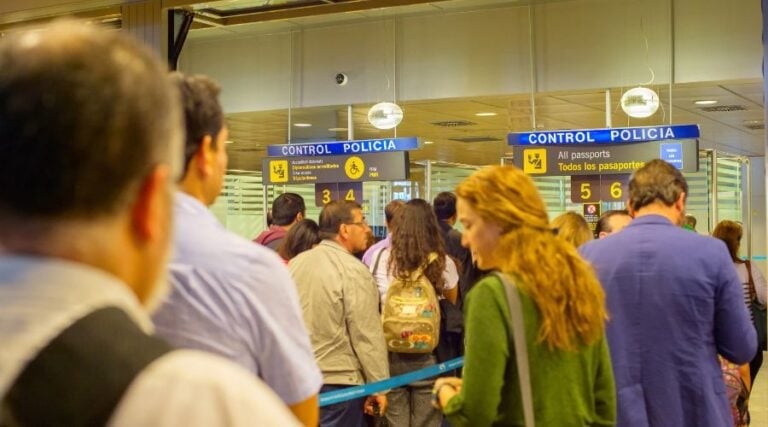
The UK Foreign Office (FCDO) has updated its advice for travellers to countries that will start introducing the European Union (EU)’s new Entry/Exit System (EES) in six days’ time.
The EES, which comes into force from 12 October 2025 for UK and other non-EU nationals, will require travellers to register at the border by scanning their passport and having their fingerprints and photograph taken.
EES will be a requirement when entering Schengen area countries including Iceland, Liechtenstein, Norway and Switzerland, as well as EU countries, but it will not be required when travelling to Ireland and Cyprus.
British travellers will need to register on their first visit to a participating country after EES is introduced. This registration is valid for a rolling three-year period or until the passport expires.
The FCDO update says: “This means that when you travel into the Schengen area for short stays, you may need to register your biometric details, such as fingerprints and a photo. You do not need to take any action before you arrive at the border, and there is no cost for EES registration.
“On your first visit into a Schengen country from 12 October onwards, you may be asked to register your details at a special booth before proceeding to the immigration desk. Follow directions from your travel operator or the staff at your port of entry. You may also need to provide either your fingerprint or photo when you leave the Schengen area. Children aged 11 or younger will not have their fingerprints scanned but may need their photo taken.”
It warns travellers to ‘be prepared to wait longer than usual at the border’.
It adds: “EES will not be rolled out to all ports of entry at once, the numbers of passengers being registered at each port of entry will vary, and some destinations may take up to 6 months to fully roll out the new process.
“Until EES is fully rolled out your passport will continue to be stamped, even if you’ve already been registered for EES. Once EES is fully rolled out, it will replace the current system of manually stamping passports when visitors arrive in the Schengen area for short stays and you will input biometric details every time you enter or exit.
“If you enter the Schengen area through the Port of Dover, Eurotunnel at Folkestone or Eurostar at St Pancras International and you are asked to register for EES, the information will be taken at the border before you leave the UK.”
At the Travel Convention in Calvià, Mallorca this morning (7 October), ABTA Chief Executive Mark Tanzer also warned there were likely to be delays for British travellers to Europe when the EES goes live this weekend.
“I reckon there will be delays because it is a new system,” said Mark.
He added that it ‘takes a while’ to go through registration, since, in addition to providing biometric data, travellers will also have to answer several questions about their trip.